How does Retail Shop Interior Design affect sales?
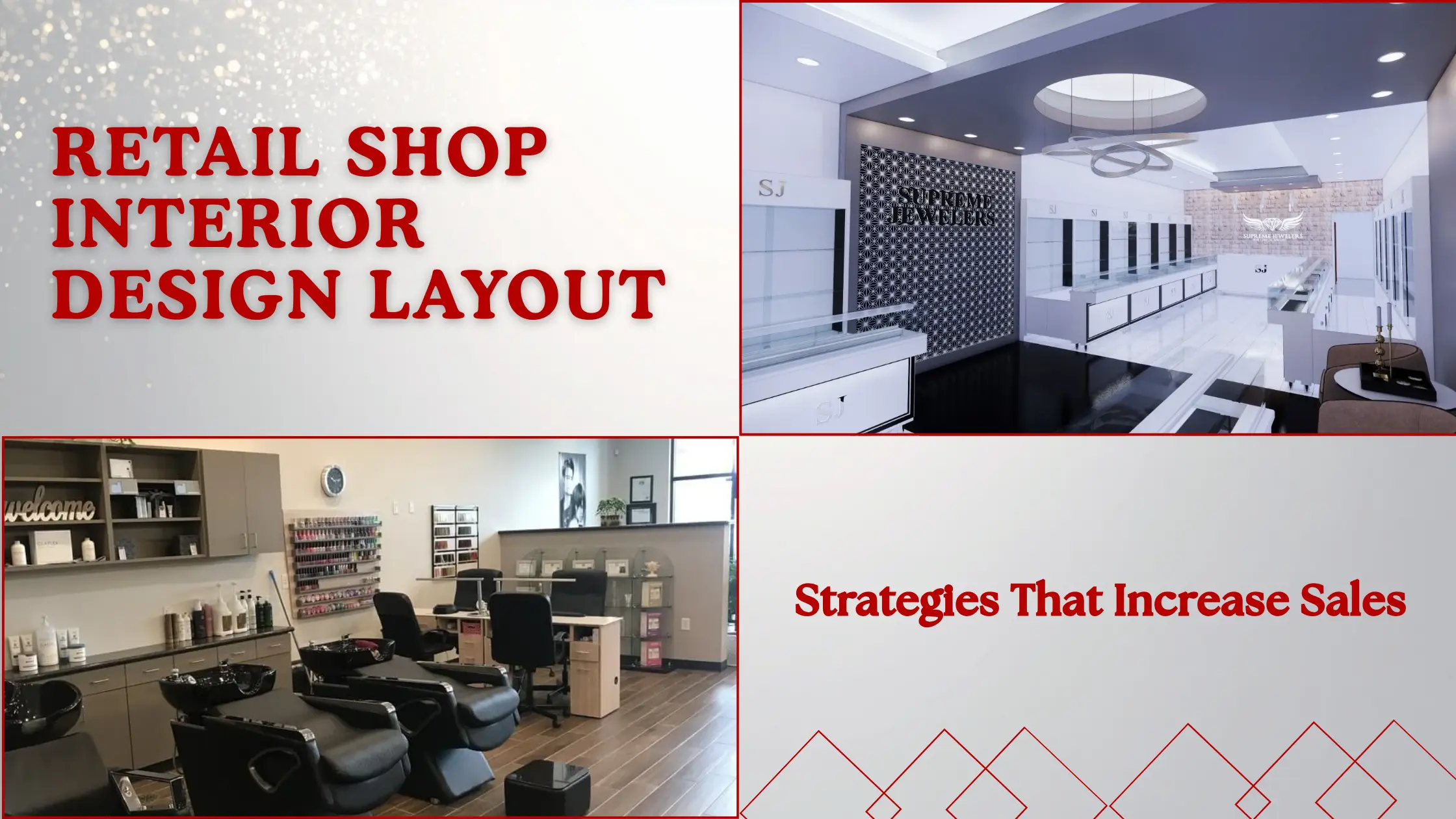
Retail shop interior design directly affects sales by optimizing customer flow, increasing dwell time, and enhancing product visibility. By utilizing strategic layouts like the loop or grid, retailers guide shoppers toward high-margin items. Research indicates that immersive design and phygital environments can boost conversion rates by 22% and significantly drive brand loyalty.
How Does Retail Shop Interior Design Affect Sales?
The relationship between retail shop interior design and revenue is rooted in environmental psychology. A store is not merely a container for products; it is a structured environment designed to influence human behavior. Effective design reduces “cognitive load” for the shopper, making it easier for them to discover, evaluate, and purchase items.
In 2026, the global interior design market, which is valued at approximately $152.33 billion, has pivoted toward “experiential ROI.” This means that every square foot of a store must serve a dual purpose: functional storage and emotional engagement. When a store layout is intuitive, customers spend more time browsing. This “dwell time” is a leading indicator of sales volume; for every additional ten minutes a customer stays in-store, the likelihood of an impulse purchase increases by 15–18%.
What Are the Most Effective Retail Layout Strategies?
Choosing a layout is the most critical decision in retail shop interior design. The layout, which is a spatial arrangement of fixtures and merchandise, has the power to dictate the pace of the shopping journey.
Comparison of Primary Retail Layouts
| Layout Type | Best Suited For | Primary Benefit | Potential Drawback |
| Grid Layout | Grocery, Pharmacy, Big Box | Maximizes floor space and product density. | Can feel clinical or uninspiring. |
| Loop (Racetrack) | Department Stores, Boutiques | Guides customers on a predictable, 360-degree path. | Can be frustrating for “mission shoppers.” |
| Free-Flow Layout | Luxury, High-End Fashion | Encourages exploration and creative storytelling. | Requires more floor space; harder to manage traffic. |
| Spine Layout | Medium-sized Specialty Shops | Creates a clear central “highway” with sub-departments. | Can lead to congestion in the central aisle. |
The Power of the “Loop Layout”
The Loop Layout, which is a circular traffic pattern, has a distinct advantage in visual merchandising. It ensures that the shopper is exposed to 100% of the store’s offerings. By placing high-demand items at the back of the loop, retailers force customers to pass high-margin, “impulse” categories, a strategy that has been shown to lift basket size by 12%.
How Does Customer Psychology Inform Store Flow?
Successful retail shop interior design accounts for subconscious human tendencies. From the moment a person crosses the threshold, their brain begins processing the environment in a specific order.
1. The Decompression Zone
The Decompression Zone, which is the first 5 to 15 feet of space inside the entrance, has the specific function of allowing the shopper to transition from the outside world. In this zone, customers are unlikely to notice merchandise or signage. Therefore, smart design keeps this area open and clutter-free.
2. The “Right-Turn” Rule
Statistically, approximately 90% of shoppers instinctively turn right upon entering a store. This area, known as the Power Wall or Strike Zone, has the highest real estate value in the building. It is the ideal location for:
- New seasonal arrivals.
- High-margin promotional items.
- Immersive digital signage or brand storytelling displays.
3. Way-finding and Visual Cues
Way-finding, which is a system of visual markers, has the goal of navigating a person through a physical space. Effective retail shop interior design uses sightlines—clear paths of vision—to lead customers toward Focal Points. A focal point, which is an eye-catching display or architectural feature, has the capacity to draw a customer into a deeper department they might otherwise skip.
Why Is Technology Integration Crucial for 2026 Retail Interiors?
The “Phygital” trend—the merging of physical and digital retail—is no longer optional in 2026. Retail shop interior design must now accommodate hardware and software that bridges the gap between the screen and the shelf.
- Interactive AR Mirrors: These devices, which are often found in fashion boutiques, have the ability to overlay digital clothes on a customer’s reflection, increasing engagement by 94%.
- AI Shopping Agents: As Agentic AI becomes standard, store layouts must provide “agent-friendly” markers and RFID tags so that a customer’s digital assistant can navigate the physical aisle.
- Smart Fitting Rooms: These spaces have integrated tablets that allow shoppers to request different sizes or colors without leaving the room, reducing “abandonment rates” by 30%
Personalization, which is a core marketing pillar, now manifests physically. In 2026, hyper-personalized retail environments, where digital displays change based on the specific customer standing in front of them, can drive up to 40% more revenue than static designs.
What Role Does Lighting and Sensory Branding Play?
Light and scent are the “invisible” components of retail shop interior design. They affect the limbic system, the part of the brain responsible for emotion and memory.
Layered Lighting Strategies
A professional lighting plan, which is a technical document specifying fixture types and placement, has three layers:
- Ambient Lighting: The general illumination of the store.
- Accent Lighting: High-intensity beams used to highlight specific products on the Power Wall.
- Task Lighting: Focused light at the POS (Point of Sale) or dressing rooms to ensure functional clarity.
Sensory Branding
Sensory Branding, which is a multi-sensory marketing approach, has been shown to increase brand recall. Stores that utilize a signature scent or a curated acoustic environment see a 40% increase in customer satisfaction scores. For example, warm earth tones and biomorphic curves (the 2026 design trend toward natural shapes) create a “calm commerce” environment that counters the stress of urban shopping.
How to Measure the ROI of Retail Design Changes?
To prove that retail shop interior design is a profit center rather than a cost center, managers must track specific Key Performance Indicators (KPIs).
- Sales per Square Foot: The most direct measure of floor plan efficiency.
- Conversion Rate: The percentage of visitors who make a purchase. Immersive 3D/AR content in 2026 has been linked to a 94% improvement in this metric.
- Capture Rate: The number of people who enter the store compared to the total “passerby” traffic. This measures the effectiveness of Window Displays and Storefront Design.
- Dwell Time: Measured via IoT sensors and heat mapping, this tracks how long customers stay in specific zones.
Conclusion: Designing for the 2026 Consumer
Modern retail shop interior design is a balance of architectural logic and psychological triggers. By moving away from clinical, static layouts toward flexible, modular, and phygital environments, retailers can turn a simple transaction into a memorable brand experience.
Whether you are implementing a Grid Layout for efficiency or a Loop Layout for maximum exposure, the goal remains the same: reduce friction and increase inspiration. In an era where 97% of Gen Z consumers still value the physical store experience, the design of your interior is your most powerful competitive advantage.
FAQ: Retail Shop Interior Design & Layout
Q: Which retail layout is best for increasing impulse purchases?
A: The Loop Layout (or Racetrack) is generally best for impulse buys because it guides the customer past every product category, maximizing exposure to “add-on” items before they reach the checkout.
Q: What is the “Strike Zone” in a retail store?
A: The Strike Zone is the area immediately to the right of the entrance. Because most shoppers instinctively turn right, this is the highest-traffic area and should be used for your most important or high-margin merchandise.
Q: How often should a retail shop update its interior design?
A: While a full renovation may happen every 5–7 years, Flex Retail strategies suggest updating Visual Merchandising and “branded zones” every quarter to keep the experience fresh for repeat customers and to align with seasonal trends.