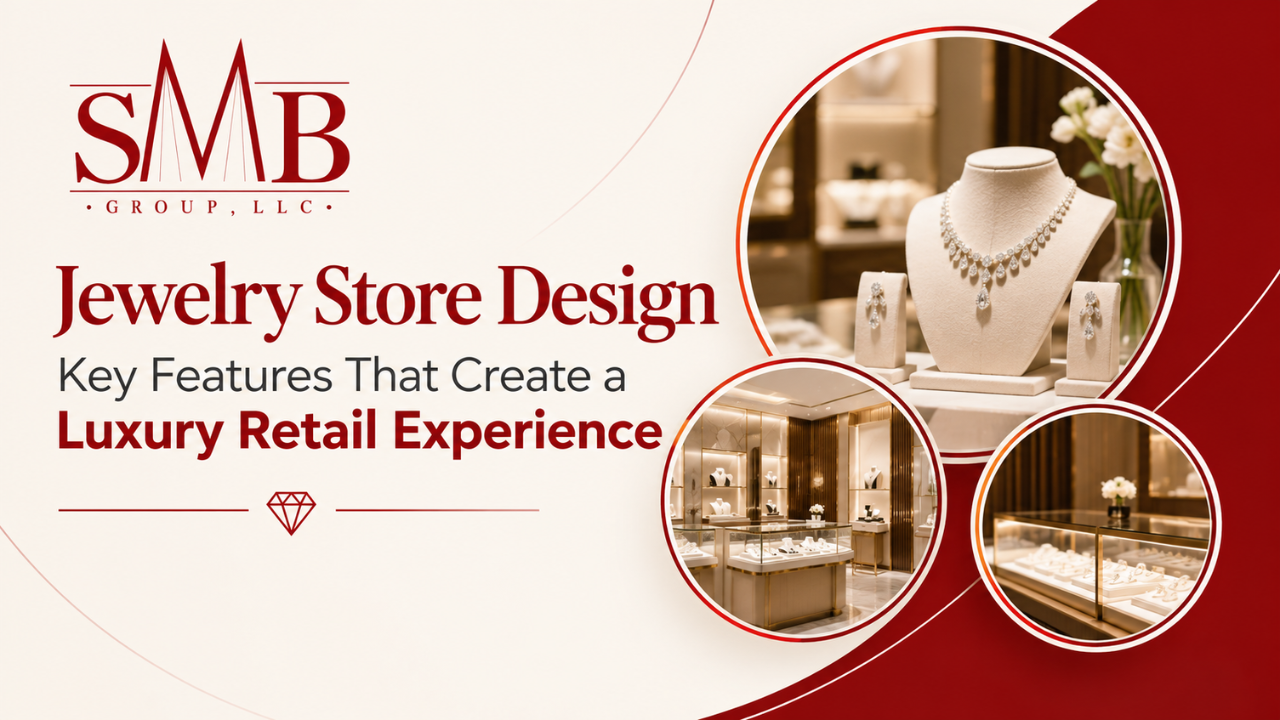
Luxury isn’t a finish level — it’s a feeling, and it’s built from dozens of small design decisions working together. A jewelry store can use expensive materials and still feel generic, or it can use modest materials and feel genuinely upscale, because the difference comes from how the space is designed to move, light, and present, not just what it’s made of.
Here are the features that actually create a luxury retail experience in jewelry store design — and how they work together.
1. Customer Flow That Feels Unhurried
Luxury retail design starts with how a customer moves through the space. The best jewelry stores are laid out so customers never feel funneled or rushed:
- A clear, open entry that doesn’t force an immediate decision about where to go
- A natural path past feature displays before reaching the main counter
- Distinct zones for casual browsing versus private consultation — high-value purchases deserve a seated, unhurried setting away from foot traffic
Cramped or maze-like layouts read as discount retail, even with premium finishes. Space itself — generous aisle widths, uncluttered sightlines — is one of the most underrated luxury cues.
2. Display Cases as Architecture, Not Furniture
In a luxury jewelry store, display cases aren’t just storage for merchandise — they’re the architectural centerpiece of the room. That means:
- Cases positioned to create a visual hierarchy, drawing the eye to hero pieces or feature collections first
- High-quality glass and hardware that reads as premium up close, where customers are looking most carefully
- Enough case variety — wall cases, island cases, and feature pedestals — to avoid a repetitive, big-box feel
- Security built into the case design itself, not as a visible add-on
3. Lighting That Does the Selling
Nothing affects perceived luxury more than lighting. A layered lighting plan — ambient, accent, and task lighting working together — is what makes diamonds sparkle and gold read rich rather than flat. High-CRI (color rendering index) fixtures aimed specifically into cases are a non-negotiable in true luxury jewelry design, because lighting quality has a direct, measurable effect on how valuable merchandise appears.
4. Finishes That Signal Quality Without Shouting
Luxury finishes tend toward restraint: natural materials, warm neutral palettes, and subtle texture rather than loud pattern or heavy ornamentation. Stone, wood, and metal accents — used selectively rather than everywhere — read as more expensive than a space that tries to look luxurious through sheer volume of decoration.
5. Branding Integrated Into the Architecture
In a well-designed luxury store, branding isn’t a logo slapped on a wall — it’s woven into the architecture itself: custom millwork details, a signature color used sparingly in accent lighting or upholstery, or a consistent material palette that carries from the storefront through to the display cases. This kind of integration requires branding decisions to be made at the design stage, not added after construction is finished.
6. Security Designed to Feel Invisible
Ironically, the more secure a jewelry store needs to be, the more its security has to disappear visually for the space to feel luxurious. That means vaults and reinforced structures planned into the architecture from the start, alarm and camera systems integrated discreetly, and case locking mechanisms that look refined rather than industrial. Organizations like the Jewelers Security Alliance are a useful reference for current best practices in jewelry retail security — balancing real protection with a space that still feels welcoming rather than fortified.
Why These Features Have to Be Designed Together
A luxury jewelry store isn’t the sum of six separate decisions — it’s one system, where layout determines where lighting needs to be strongest, lighting determines how case materials read, and security has to be woven through all of it without disrupting the experience. This is exactly why jewelry store design works best under a design-build model, where the same team is making layout, lighting, finish, and security decisions together from the first floor plan — not coordinating them after the fact between separate vendors.
SMB Group’s jewelry store design and construction work across the Houston area integrates architectural design with construction under one accountable team, so every one of these elements is planned in concert rather than in isolation.
Frequently Asked Questions
What makes a jewelry store feel luxurious? A combination of unhurried customer flow, architecturally integrated display cases, layered high-quality lighting, restrained premium finishes, branding built into the space itself, and security that’s effective without feeling heavy-handed.
What’s the most important design element in a jewelry store? Lighting is often considered the single highest-impact decision, since it directly affects how metals and stones are perceived by customers — but it only works well when planned alongside layout and case design, not in isolation.
How does security affect jewelry store design? Security needs — vault placement, reinforced structure, alarm and camera integration — are easiest to execute well when planned into the architecture from the start, rather than retrofitted after construction, which is harder to do discreetly.
Does SMB Group design and build luxury jewelry stores? Yes — SMB Group handles both design and construction for jewelry retail clients across the Houston area, from layout and lighting through security integration and final finishes.
Designing or redesigning a jewelry store in the Houston area? Contact SMB Group to start the conversation, or browse our jewelry store portfolio.